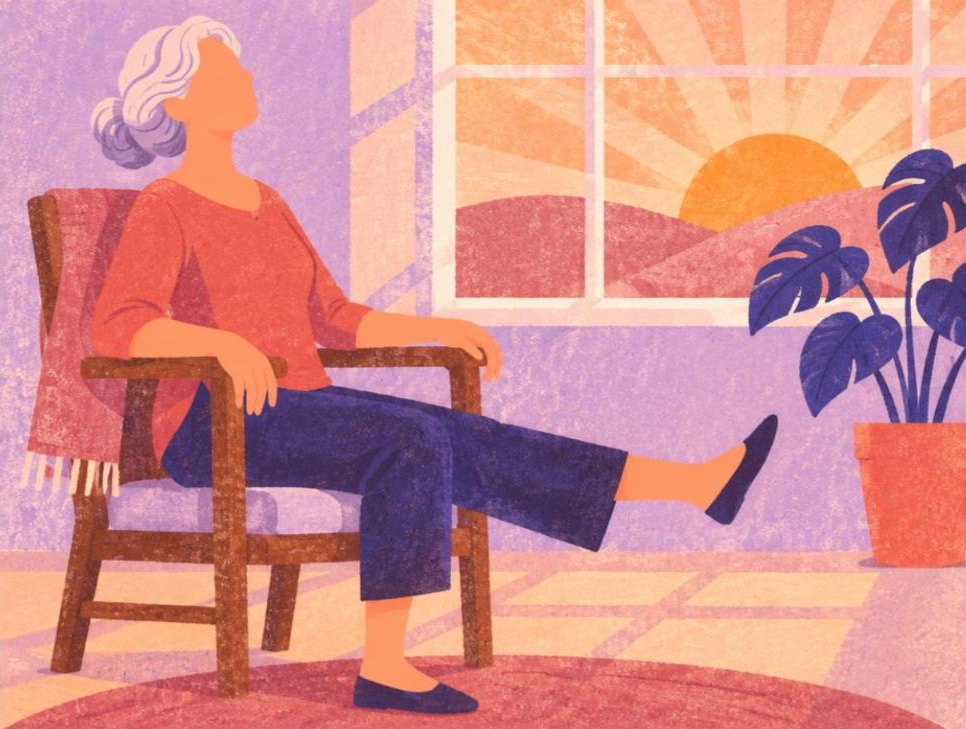
Hinge Care has one aim: less arthritis pain, less stiffness, and more good days for the people living with it.
The short answer
- Morning stiffness happens because joints sit still for hours while you sleep. Movement and warmth loosen them again.
- Start in bed: ankle circles, hand squeezes and heel slides before you stand.
- A warm shower, a warm mug and a slower start make the first half hour easier.
- Stiffness lasting more than 30 minutes most mornings is worth telling your doctor about.
You wake up, and before your feet touch the floor you already know what kind of morning it's going to be. Knees that won't bend all the way. Fingers that feel two sizes too big. A back that needs a minute before it agrees to stand up straight.
In one study, people with arthritis said morning pain and stiffness hurt their quality of life more than any other symptom.1 That's the hard part. The easier part: mornings answer to small changes, and most of them happen the night before.
Why your joints are stiffest when you wake up
While you sleep, your joints barely move for hours. The fluid that cushions them thickens, and the muscles around them cool and tighten. Movement and warmth loosen everything again, which is why stiffness fades as the morning goes on.
How long it lasts is a clue worth paying attention to. Harvard Health says morning stiffness from osteoarthritis, the wear-and-tear kind, usually lasts about 10 to 15 minutes. Stiffness from rheumatoid arthritis can last more than an hour.2
Stiff for more than half an hour most mornings? That's worth a conversation with your doctor.
The first 30 minutes, one step at a time
Treat waking up like a car on a cold day: warm the engine before you drive. Here's how those minutes can go.
- Still in bed
Circle your ankles, open and close your hands, and slide each heel up and back a few times. People in one rheumatoid arthritis community say slow stretches in bed help them most.3
- Bedside
Sit for a full minute. Roll your shoulders, turn your head side to side, and drink the glass of water you left out last night.
- Warm water
A warm shower or bath relaxes tight muscles. The Arthritis Foundation suggests a hot shower or heating pad for an easier start.4 A shower stool is fine.
- Warm hands, then grip
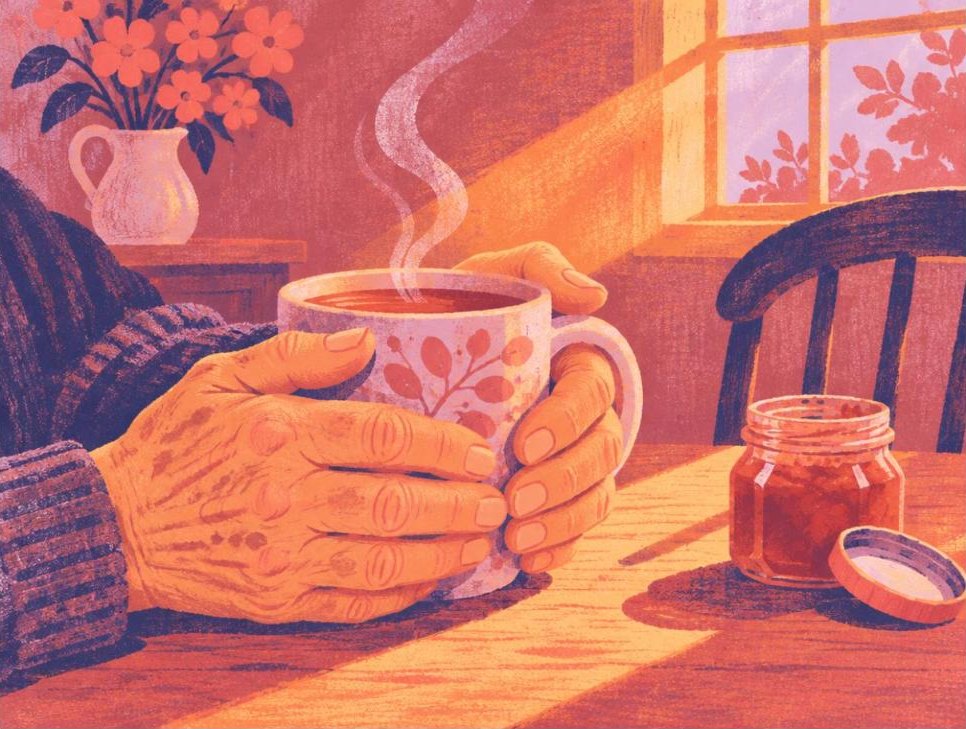
Hold a warm mug in both hands before you button a shirt or open a jar.
- Check in
Feeling looser? Good. Still very stiff after half an hour, most mornings? That's worth telling your doctor.
The night before does half the work
Most of what makes mornings easier happens the evening before.
In the evening
- A short, easy walk or a few slow stretches
- A warm castor oil pack if you enjoy one
- Clothes laid out, jar lids loosened
Overnight
- A warmer bedroom
- Soft socks, or a blanket over sore knees
- Water and glasses within reach
Stiff knees, hands, hips and back
Stiff knees in the morning, stiff hands and fingers, tight hips or an achy lower back all respond to the same three things: movement before you stand, warmth, and a slower start. Call it achy joints, morning joint pain or just feeling rusty. The plan above is a safe place to start for most older adults with arthritis, and it's easy to set up for an elderly parent too.
Track it for two weeks
Each morning, write down how many minutes it takes before you feel loose. You'll see what's helping, and you'll have real numbers to show your doctor.
When to call your doctor
See your doctor if stiffness lasts longer than 30 minutes most mornings, if a joint is swollen, hot or red, if you have a fever, or if pain keeps you awake.
Wondering which arthritis home remedies are worth your money? The Joint Reset, our book, goes through dozens of them in plain words.
Questions people ask about arthritis
Why are my joints so stiff when I wake up?
Lying still for hours lets the fluid that cushions your joints thicken and the muscles around them cool and tighten. Movement warms everything up again, so stiffness usually eases as the morning goes on.
How long should morning stiffness last?
With osteoarthritis it usually lasts about 10 to 15 minutes, according to Harvard Health. With rheumatoid arthritis it can last more than an hour. If yours lasts longer than 30 minutes most mornings, tell your doctor.
What is the fastest way to loosen stiff joints in the morning?
Start moving while you're still in bed, then take a warm shower or use a heating pad. Circling your ankles and opening and closing your hands before you stand helps many people.
What helps stiff knees and hips in the morning?
Slide each heel toward you and back a few times before getting up, sit on the side of the mattress for a minute, and use warmth. A short, easy walk in the evening can also mean less stiffness the next morning.
What helps stiff hands and fingers in the morning?
Run your hands under warm water or hold a warm mug with both hands, then slowly open and close your fingers. Loosening jar lids the night before saves your hands in the morning.
How can I help an elderly parent with morning joint stiffness?
Help them set up an easier morning: water by the bed, a shower stool, clothes laid out the night before, and kitchen items within easy reach. Encourage a little movement before standing, and a doctor visit if stiffness lasts longer than 30 minutes.