Hinge Care has one aim: less arthritis pain, less stiffness, and more good days for the people living with it.
Moving hurts, so you move less. Moving less makes the joints stiffer, so moving hurts more. If that loop sounds familiar, you're not stuck in it for good.
The CDC says adults with arthritis can cut pain and improve how well they move by about 40% just by being physically active.1 You don't need a gym, special clothes or a single pound of weights. You need a firm chair, a little floor space, and a pace that feels kind.
Why moving helps stiff joints
Doctors used to tell people with arthritis to rest. That advice has changed. Movement keeps joints nourished, keeps the muscles around them strong enough to share the load, and helps with balance.
The CDC suggests working up to 150 minutes a week of moderate activity, like brisk walking, plus two days of muscle-strengthening and some balance work.2 If that sounds like a lot, it also says this: some activity is better than none.2
How to start when everything aches
The CDC's advice is to start low and go slow. Someone who hasn't been active can begin with just 3 to 5 minutes, twice a day, and add a little more once the body adjusts.3
The two-hour rule many people use
Mild soreness is normal when you start something new. If a joint hurts more two hours after moving than it did before, do a little less next time.
The five-minute arthritis chair routine
Sit near the front of a firm chair with no wheels, feet flat on the floor. Move slowly, breathe normally, and stop anything that causes sharp pain.
Seated marching
30 secondsLift one knee a few inches, lower it, then the other. Warms up the hips and knees.
Knee straightening
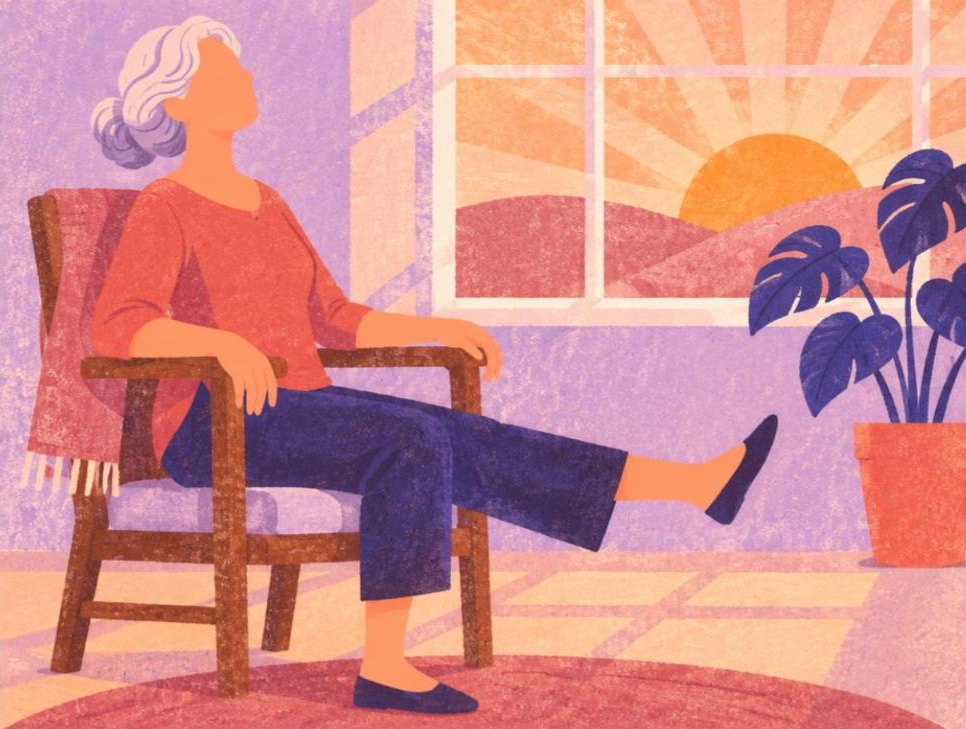
5 each sideStraighten one leg until it is level with the chair, hold a breath, lower slowly. Builds the muscles that protect the knee.
Ankle circles
5 each wayLift one foot slightly and draw slow circles. Then switch feet.
Shoulder rolls
5 back, 5 forwardRoll both shoulders up, back and down. Then reverse.
Open and close
10 slow repsMake a soft fist, then spread your fingers wide. Good for stiff fingers.
Sit to stand
3 to startScoot forward, lean over your feet, stand using your legs, and sit back down slowly.

Walking, water and other joint-friendly activities
Joint-friendly activities are low-impact, meaning they don't pound or twist the joints. The CDC lists walking, biking and swimming as examples.2 Water exercise is a favorite for many people with sore knees and hips, because the water supports your weight.
Short walks count. Two 10-minute walks a day add up quickly, and a walk after dinner can mean less stiffness the next morning. For mornings, see our explainer on easing morning joint stiffness.
When to stop
Stop if a joint becomes hot, red or very swollen, or if you feel chest pain, dizziness or shortness of breath.
A slow, steady routine you enjoy beats a hard one you dread. Our Hinge Care Program turns this into a short routine for each day, seated moves included.
Questions people ask about arthritis
What is the best exercise for arthritis in seniors?
Low-impact activities like walking, swimming, water exercise and cycling are joint-friendly choices the CDC recommends, along with simple strength and balance exercises. The best one is the one you'll keep doing.
Are chair exercises good for arthritis?
Yes. Chair exercises let older adults build strength and loosen joints without standing for long or getting down on the floor. Seated marching, knee straightening and sit-to-stand are good places to start.
How much exercise should someone with arthritis do?
The CDC suggests working up to 150 minutes a week of moderate activity plus two days of strength and balance work. If that's too much, start with a few minutes at a time. Some activity is better than none.
Should I exercise if my joints hurt?
Mild soreness is common when you start. Choose low-impact moves and go slowly. If a joint is hot, red or very swollen, rest and talk to your doctor.
What exercises should I avoid with knee arthritis?
High-impact moves like jumping and running on hard surfaces, and deep squats or kneeling, can be hard on sore knees. Ask your doctor or a physical therapist which moves suit you.
Can exercise help arthritis in the hands?
Simple hand exercises, like slowly opening and closing a soft fist and spreading the fingers, can help keep fingers moving. Warm the hands in warm water first.