The short answer
- Pain, stiffness and joint changes can weaken the hands, which makes jars, cups and keys harder. That's a joint problem, not clumsiness.
- Pinching between thumb and finger puts extra stress on sore joints. Use your palm and bigger joints when you can.
- Cushioned handles, a jar opener, an electric can opener and lever door handles take the work out of daily jobs.
- An occupational therapist can show you tools and easier ways to do tasks.
- Dropping things suddenly, or new numbness or weakness, is worth telling your doctor about.
The cup was in your hand and then it wasn't. Or the lid that opened last year now feels welded shut. Most people blame themselves first. Please don't. When hands hurt and the joints have changed, grip gets weaker, and that's the hand, not you.
Why grip gets weaker
The Arthritis Foundation says pain, loss of motion and changes in the joints can weaken the hands, which makes tasks like opening a jar or starting a car hard.1 Stiff fingers that won't open or close all the way make it worse.1
If you've started dropping things, or your fingers feel numb or tingly, mention it to your doctor. Numbness points to something other than sore joints, such as carpal tunnel syndrome, and it's worth sorting out.2
Go easy on the small joints
The Mayo Clinic's first rule for hand arthritis is to avoid tight pinching. Pinching an item between thumb and forefinger puts extra stress on joints that already hurt.3 Its other early tips:
- Use your large joints and your whole palm when you carry things.
- Hold a book with your palms and keep your fingers straight, or rest it on a table, a book holder or a pillow. A tablet works too.
- Carry a bag on a shoulder strap across your body, instead of hanging the weight from your fingers.
Tools that do the gripping for you
Mayo Clinic lists these everyday helpers. None is fancy, and most cost little.3
In the kitchen
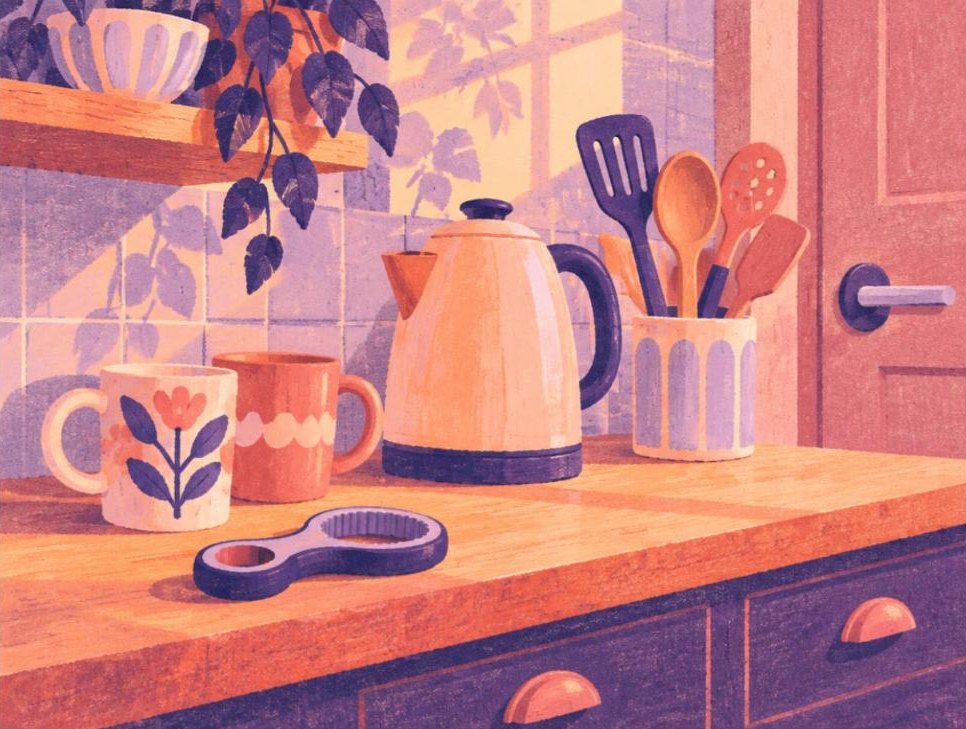
- Jar openers with large, cushioned grips, or one mounted under a cabinet
- An electric can opener
- Vegetable peelers, spatulas and spoons with larger, cushioned handles
- Knives with offset handles and serrated blades that keep your wrist straight
- An adaptive cutting board with pegs that hold food in place
Around the house
- Foam tubing slipped over toothbrush and utensil handles, or an electric toothbrush
- Lever attachments for doorknobs, and large turning tools for keys and oven knobs
- A buttonhook, loose clothes with big buttons or zippers, and slip-on shoes with a long-handled shoehorn
- Large-barrel pens, or rubber grips on the pens you already own
- Spring-loaded scissors for sewing and crafts
Ask an occupational therapist
An occupational therapist (OT) is a health professional who helps with everyday tasks. The Arthritis Foundation suggests seeing one about assistive devices and easier ways to do daily jobs.4 Ask your doctor for a referral. It's a good use of one appointment.
If you're buying for someone else, see our list of gifts for a parent with arthritis.
Questions people ask
Why do I keep dropping things with arthritis?
Pain, stiffness and joint changes can weaken grip, and swollen or stiff fingers may not close fully. If it's new or getting worse, or you feel numbness, tell your doctor.
What is the easiest way to open a jar with arthritis?
Use a jar opener with a large, cushioned grip, or one mounted under a cabinet, and press with your palm instead of pinching with your fingertips. An electric can opener helps with cans.
What kitchen tools are best for arthritic hands?
Mayo Clinic suggests peelers, spatulas and spoons with larger cushioned handles, knives with offset handles, and a cutting board with pegs that hold food steady.
Is it arthritis or carpal tunnel if my hands go weak?
Either, or both. Carpal tunnel often causes numbness and tingling in the thumb-side fingers, while arthritis causes aching, stiffness and swelling in the joints. A doctor can tell which.
How can I protect my hands from arthritis pain?
Avoid tight pinching, use your palms and larger joints, choose tools with big cushioned handles, and ask an occupational therapist about devices that fit you.